
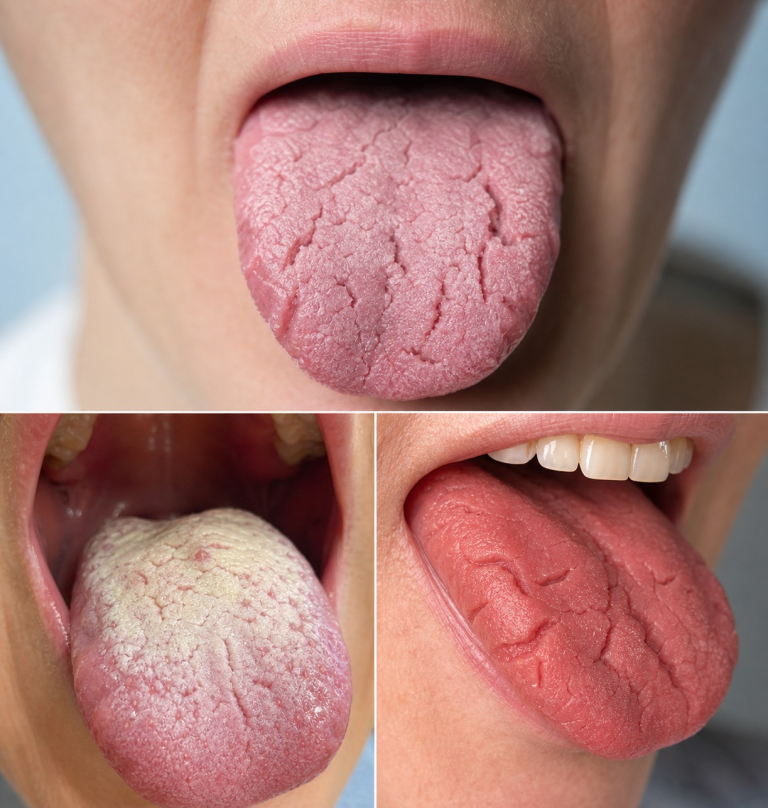
Many seniors take multiple medications daily, and one common side effect is dry mouth. Blood pressure medications, allergy treatments, antidepressants, and sleep aids can all reduce saliva production.
When the mouth stays dry for extended periods, the tongue becomes more vulnerable to discoloration and coating. This environment allows bacteria to thrive, contributing to a white appearance and unpleasant taste.
Addressing dry mouth may involve reviewing medications with your healthcare provider, using sugar free lozenges to stimulate saliva, or increasing fluid intake. Simple steps like breathing through the nose instead of the mouth during sleep can also help.
Dry mouth is more than a nuisance. It affects chewing, swallowing, and speech. Paying attention to early signs like a white tongue can help prevent further discomfort.
Diet, Lifestyle, and Daily Habits
What you eat and drink also influences the appearance of your tongue. Diets high in sugar or processed foods encourage bacterial growth in the mouth. Smoking and alcohol use can further dry the tissues and irritate the tongue.
