
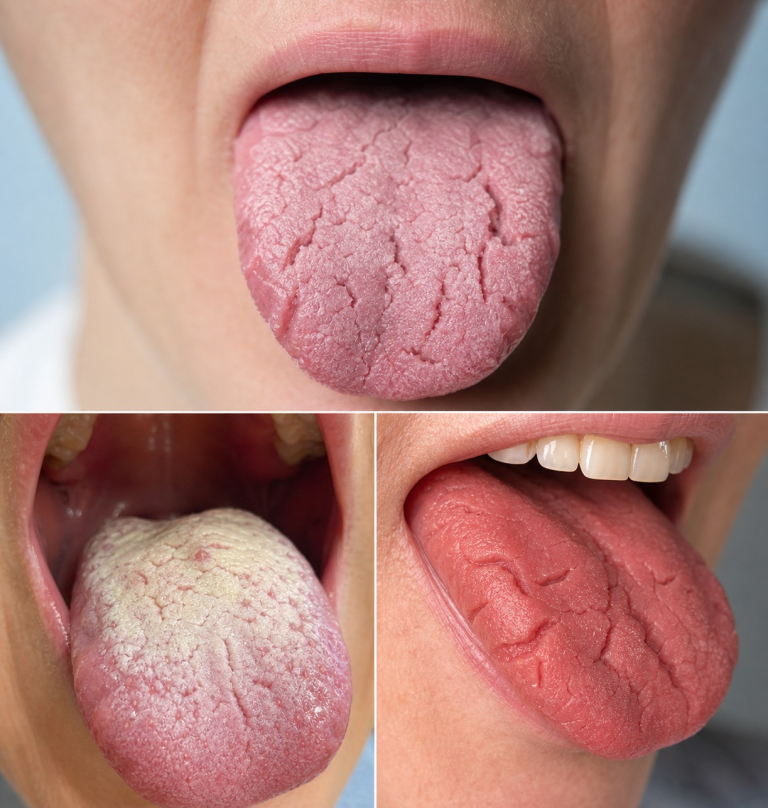
As we age, the sensation of thirst becomes less reliable. Many seniors do not feel thirsty even when their bodies need fluids. Certain medications can also reduce saliva production, leading to a dry mouth. When saliva decreases, the mouth loses its natural ability to wash away bacteria and food particles.
Without adequate moisture, the tongue dries out and develops a pale or white appearance. This is often accompanied by bad breath, difficulty swallowing, or a sticky feeling in the mouth.
Drinking enough water throughout the day is one of the simplest and most effective ways to support oral and overall health. Sipping water regularly, even when you are not thirsty, helps maintain saliva flow and keeps the tongue clean.
Hydration also supports circulation, joint health, digestion, and mental clarity. A white tongue may be your body’s early reminder to drink more fluids and care for yourself more attentively.
Oral Thrush and Immune Balance
In some cases, a white tongue may be linked to oral thrush, a condition caused by an overgrowth of yeast in the mouth. This often appears as thick, creamy white patches that may feel tender or sor
