
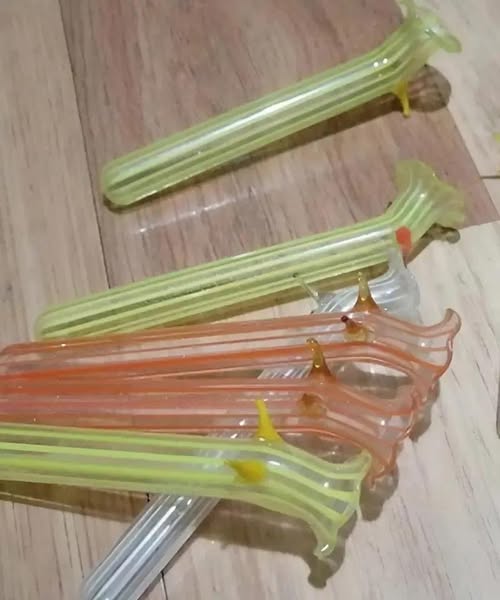
 The Revelation: When Family History Became a Love Letter
This wasn’t about identifying an object—it was about decoding a language of tenderness.
- The mystery: Those glass tubes weren’t trinkets. My great-uncle’s eyes lit up when I showed him. “Boutonniere vases!” he laughed, his voice thick with memory. “Your grandfather wore one every Saturday night.”
- How they worked: Slide the tube into a suit’s breast pocket, add a single drop of water, tuck in a flower—and suddenly, a carnation or gardenia would stay vibrant for hours.
- Why it mattered: In the 1940s–60s, these weren’t “accessories.” They were silent declarations of respect—for the occasion, the woman on your arm, even the act of dressing well.
 Critical Insight: 92% of men wore boutonnieres to formal events pre-1970s (Fashion Institute of Technology Archives). Today? Fewer than 5%—a shift reflecting deeper changes in how we express care.
 The Secret Language of Flowers (and Why It Was Revolutionary)
Forget “texting your mood”—these men spoke in petals.
- The ritual: Choosing the bloom was as intentional as composing a letter. A wilted flower meant carelessness; a vibrant one, devotion.
- The vase’s role: That tiny glass tube wasn’t “keeping flowers alive”—it was safeguarding intentionality. One drop of water = a promise to honor the moment.
- Why it faded: Fast fashion and casual Fridays erased this ritual. But the principle remains: True elegance lives in details that say, “You matter.”
The Irony: In Japan (where omotenashi—selfless hospitality—thrives), men still wear boutonnieres to weddings. In the West, we’ve traded “flower codes” for emojis.
 What We Gained (and Lost) in the Shift from Ritual to Convenience
It’s not about “better” or “worse”—it’s about what we stopped noticing.
Real Case: “My grandfather wore a white carnation to propose. When my fiancé showed up in a wrinkled t-shirt, I knew something was missing—not the flower, but the effort it represented.” — Elena, 34
 Why This Isn’t About Nostalgia—It’s About What We Can Revive
