
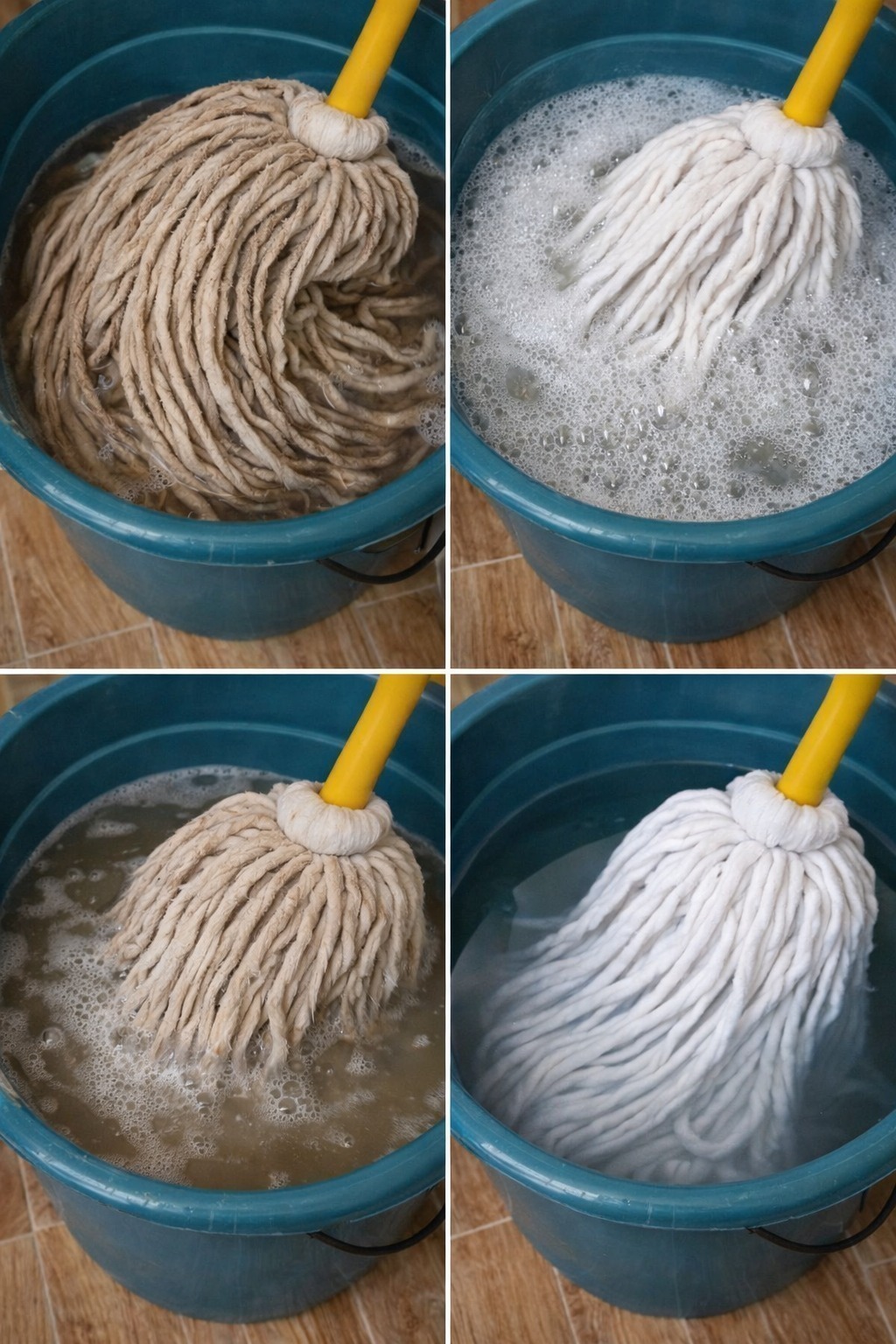
Very dirty mop, don’t buy it again: a drop of this ingredient and it will be like new.
2. Vinegar & Lemon (Ideal for Disinfecting & Brightening)
→ Mix 1 cup white vinegar + juice of 2 lemons per liter of warm water
→ Soak mop head 30–60 minutes
→ For extra power: Add 2 tbsp baking soda to the soak (it will fizz—this is normal)
→ Rinse well—vinegar smell disappears once dry
3. Tea Tree Oil Solution (Antibacterial Boost)
→ Combine 4 cups warm water + juice of 1 lemon + 10 drops tea tree oil
→ Soak mop 30 minutes
→ Rinse thoroughly
→ Note: Tea tree oil is naturally antimicrobial—ideal for kitchens and bathroomsCondiments & Dressings
4. Ammonia Rinse (For Heavy Soil—Use with Caution)
→ Mix ¼ cup household ammonia per gallon of cool water
→ Soak 15–20 minutes
→ Rinse extremely well (2–3 times)
→ Air-dry completely before storage
→ Safety: Use in well-ventilated area; never mix with bleach
Drying & Storage: The Final Step
Cleaning alone isn’t enough—proper drying prevents regrowth of bacteria and mildew:
✓ Wring mop completely after rinsing
✓ Hang vertically with fibers extended (not bunched)
✓ Dry in sunlight if possible—UV rays naturally disinfect
✓ Store only when 100% dry—damp storage guarantees odors
Sustainable Cleaning, Simplified
These methods cost pennies, avoid harsh chemicals, and extend your mop’s life significantly. More importantly, they honor a simple truth: the tools we use to care for our homes deserve care themselves.Gardening
A clean mop isn’t a luxury—it’s the foundation of truly clean floors. And with baking soda, vinegar, or lemon already in your pantry, revival is always within reach.
Your floors—and your wallet—will thank you.
Note: Always check manufacturer care instructions before deep-cleaning specialty mops. Natural methods work best on cotton, microfiber, and cellulose mop heads.
