
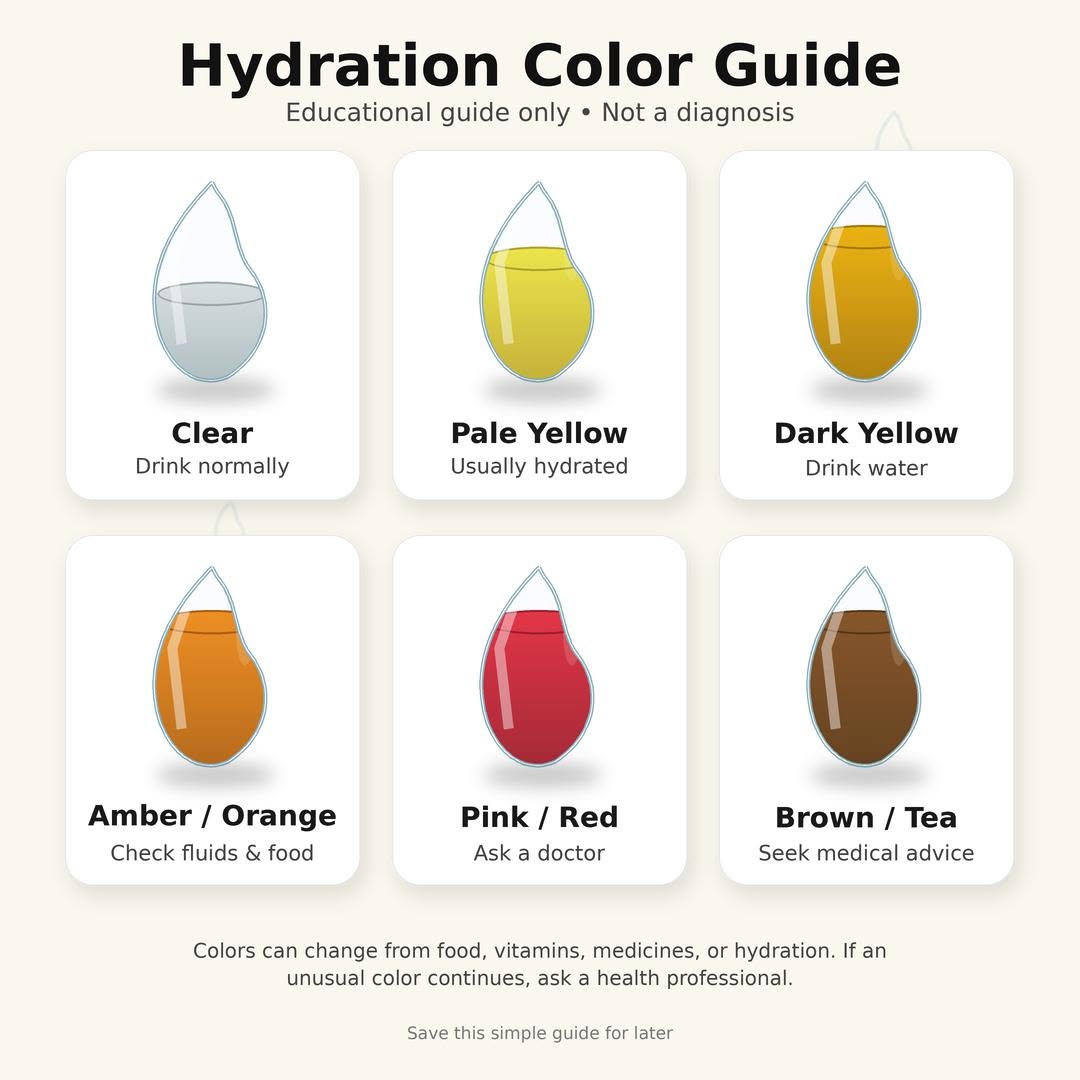
Dark yellow urine
Dark yellow urine may happen when your body needs more fluids, especially during hot weather, sweating, or physical activity.
Tip: Try drinking water regularly throughout the day.
Amber or orange urine
Orange or amber urine can be linked to dehydration, some foods, vitamins, or medication. Sometimes, it may need medical advice if it continues.
Tip: Drink water and pay attention to whether the color changes. If it stays the same, ask a healthcare professional.
Brown or tea-colored urine
Brown urine can happen for different reasons, including dehydration, some foods, medication, or other health-related causes.
Recommendation: If the color continues or you feel unwell, seek medical advice.
Pink or red urine
Pink or red urine can sometimes be caused by foods such as beets or by certain medications. However, it can also be a sign of blood in the urine.
Important: If you are not sure why it happened, or if it does not go away, speak with a healthcare professional.
When should you ask for advice?
Temporary color changes are often harmless, especially after certain foods or vitamins. But if an unusual color continues for more than a day or two, or comes with pain, fever, tiredness, or other symptoms, it is better to ask a healthcare professional.
Conclusion
Checking urine color can be a simple way to stay more aware of your hydration. It only takes a few seconds, but it may help you notice when your body needs more water or when it is better to ask for medical advice.
Educational information only. This post does not replace medical advice
