
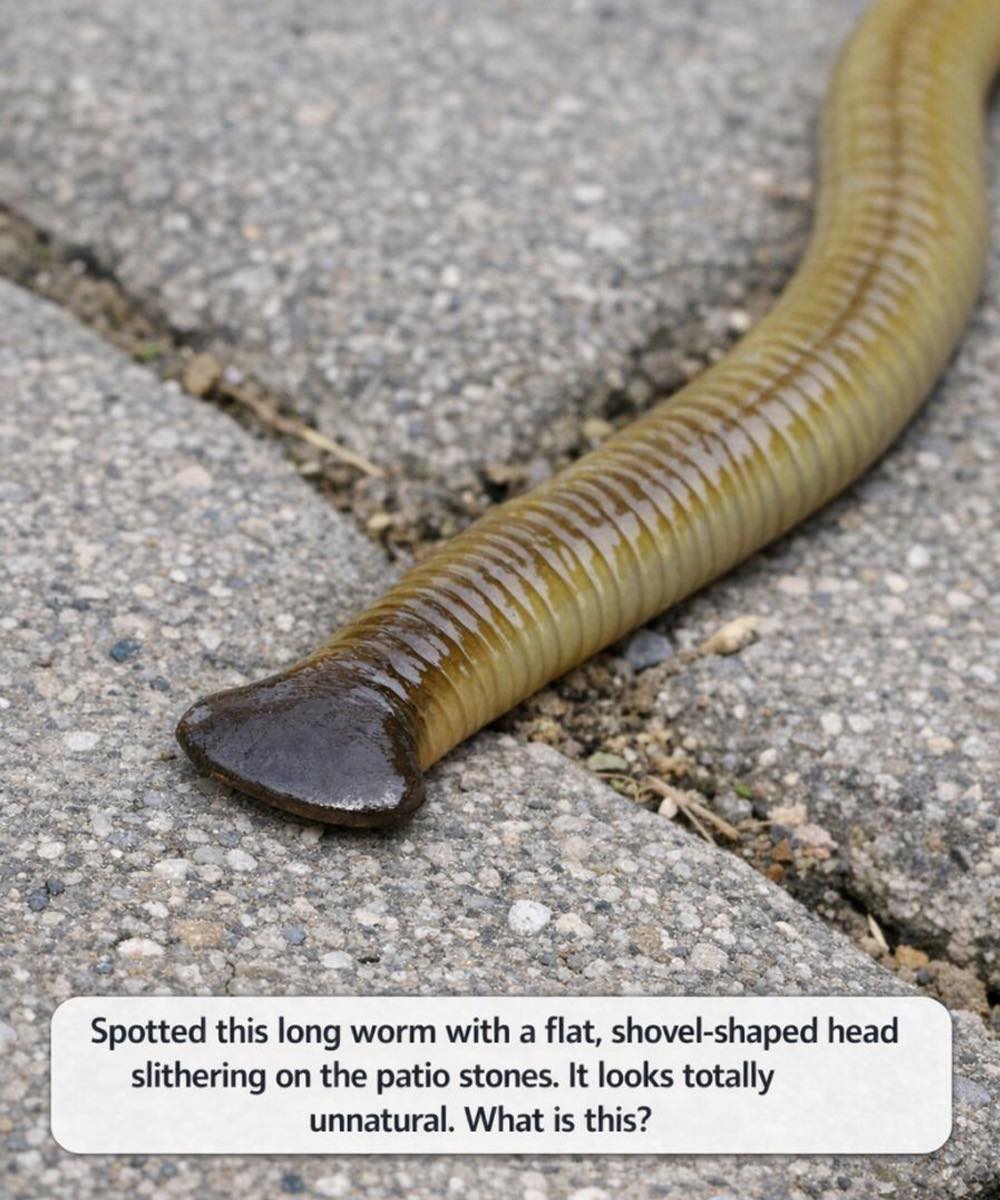
It’s not every day you come across a creature so odd it looks like it escaped from a sci-fi story. Yet more and more homeowners are spotting a long, flat worm with a shovel-shaped head sliding across their patios. This unusual animal, called the hammerhead worm, fascinates and unsettles people alike because of its alien appearance and the risks it may pose to local ecosystems.
Hammerhead worms are terrestrial flatworms that have drawn attention for both their strange look and their predatory habits. Native to Southeast Asia, they have spread to other parts of the world, often transported in the soil of imported plants. As they become more common, it’s important to know what they are, how to recognize them, and what steps to take if you find one in your yard.
1. Meet the Hammerhead Worm: The Strange Visitor in Your Yard
The hammerhead worm, belonging to the genus Bipalium, is a land flatworm known for its head, which resembles the shape of a hammerhead shark. These worms can grow surprisingly long—typically between 8 and 12 inches (20 to 30 centimeters), though some species exceed that length. Their bodies are flat and coated in slime, usually brown or gray, often marked with darker stripes running lengthwise.
Unlike earthworms, which improve soil health, hammerhead worms are carnivores. They feed on other invertebrates, especially earthworms. They also reproduce asexually through fragmentation: if a worm breaks into pieces, each fragment can regenerate into a new individual. This ability allows them to spread quickly and establish populations in new areas.
2. How to Recognize a Hammerhead Worm
Spotting a hammerhead worm is fairly easy once you know what to look for. Its most distinctive feature is the widened, flattened head shaped like a spade or hammer. This sets it apart from typical garden worms. The body is long, narrow, and noticeably flattened.
Color patterns can also help with identification. Many are brown or gray with darker stripes along their bodies, while some appear more uniformly colored. They tend to show up in damp places—gardens, beneath rocks, or on patios after rainfall—since they prefer moist conditions.
3. Why They Seem So Alien
Many people find hammerhead worms unsettling because of their unusual form and the way they move. Their flat, elongated bodies and distinctive head shapes differ greatly from the segmented worms most of us are used to seeing. Their glossy, slimy surface only enhances their strange, almost extraterrestrial look.
Their movement adds to the effect. Instead of wriggling in segments like earthworms, they glide smoothly across surfaces. Tiny hair-like structures called cilia on the underside of their bodies help them move in a fluid, snake-like fashion. This steady, seamless motion makes them seem even more otherworldly.
