
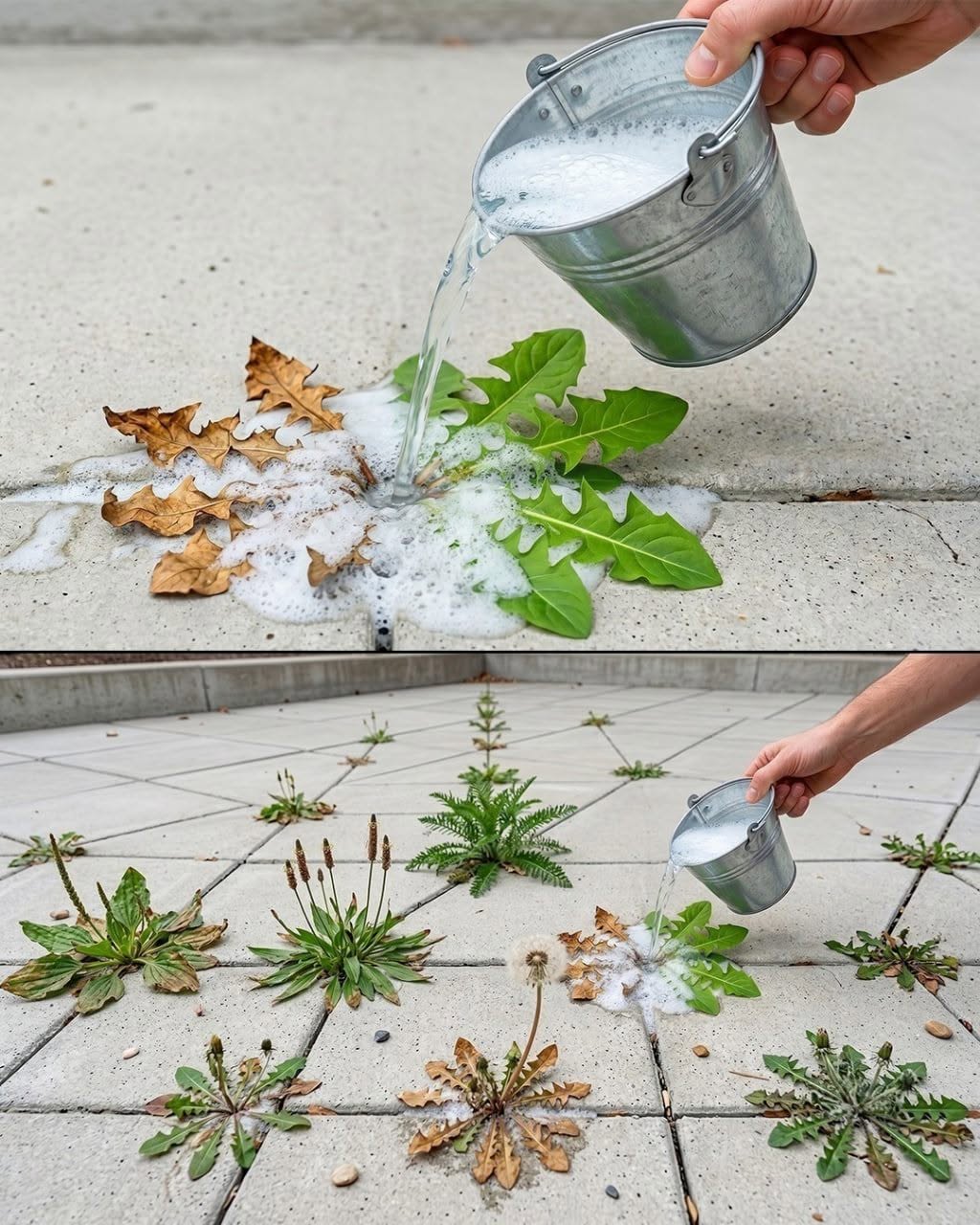
Weeds are one of the most frustrating challenges for homeowners, gardeners, and anyone who takes pride in maintaining a clean outdoor space. No matter how carefully you tend your yard, unwanted plants seem determined to appear between paving stones, along fences, in gravel driveways, and around garden beds.
For decades, many people relied on commercial herbicides to solve the problem. While these products can be effective, concerns about environmental impact, accidental exposure, and effects on beneficial insects have encouraged many homeowners to explore alternative solutions.
One of the most popular homemade weed-control methods uses simple household ingredients that can be found in most kitchens. When combined properly, these ingredients create a powerful contact spray that can quickly damage unwanted weeds.
However, before using any homemade weed killer, it is important to understand both its strengths and its limitations.
Natural does not automatically mean harmless, and some ingredients can affect soil quality if used improperly.
Why Weeds Are So Difficult to Control
Weeds are remarkably resilient because they have evolved to survive harsh conditions.
Many species:
- Grow quickly
- Produce thousands of seeds
- Develop deep root systems
- Tolerate drought
- Spread underground
This means that simply removing the visible part of the plant is not always enough.
Some weeds can regrow repeatedly from roots hidden deep below the surface.
The Ingredients Behind This Homemade Spray
This popular mixture relies on four main ingredients:
- White vinegar
- Salt
- Citric acid
- Liquid dish soap
Each ingredient plays a specific role in damaging the weed.
The science behind each ingredient continues on the next page.
White Vinegar
White vinegar contains acetic acid.
When sprayed directly onto leaves, the acid damages plant tissues and removes moisture from the surface cells.
As a result, the weed begins to wilt and dry out.
Kitchen Salt
Salt is one of the most powerful components in the mixture.
It works by drawing water out of plant cells through a process called osmosis.
Without sufficient water, the plant struggles to survive.
However, salt must be used very carefully because it can also damage the soil itself.
Citric Acid
Citric acid provides additional acidity that helps weaken plant tissue.
Combined with vinegar, it creates a stronger contact effect on exposed leaves.
Liquid Dish Soap
Plant leaves naturally contain a waxy coating that repels water.
Dish soap helps break this surface tension.
This allows the vinegar and citric acid solution to stick to the weed rather than rolling off.
What This Weed Killer Can and Cannot Do
Many people expect homemade weed sprays to work exactly like commercial systemic herbicides.
That is not usually the case.
This mixture primarily acts as a contact weed killer.
It damages the parts of the plant it touches directly.
The leaves often wilt within hours and may appear completely dead within a day or two.
However, deep roots may survive.
For perennial weeds, new growth can sometimes emerge weeks later.
Multiple treatments may be necessary.
continues on the next page.
