
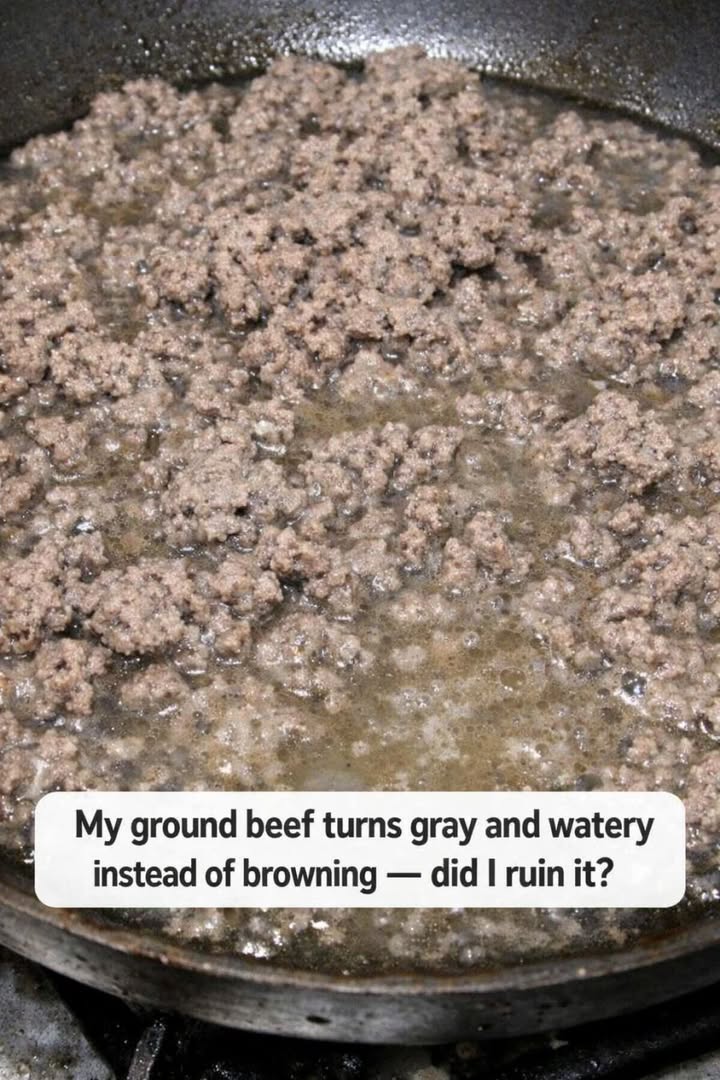
Cooking ground beef should be a straightforward culinary endeavor, yet many home cooks encounter the frustrating scenario of gray, watery meat instead of achieving that delicious brown sear. This outcome can be disheartening, especially when expecting a perfect foundation for tacos, chili, or spaghetti sauce.
Understanding why ground beef turns gray and watery instead of browning is crucial in preventing this common kitchen mishap. Whether it’s the choice of pan, the temperature of the meat, or the amount of moisture present, several factors can influence the final outcome. This article will delve into these factors and provide solutions to ensure that your ground beef is browned to perfection every time.
1. Is Gray, Watery Ground Beef Actually Ruined?
The appearance of gray, watery ground beef does not necessarily mean it is ruined or unsafe to eat. The gray color indicates a lack of Maillard reaction, the chemical process that gives browned meat its distinctive flavor and color. Watery beef typically results from excess moisture that prevents proper browning.
If the meat smells fresh and has been stored correctly, it is still safe to consume. The gray color is more about the cooking process than the quality of the beef itself. However, for dishes where flavor and texture are paramount, addressing the reasons behind the grayness is key to improving the outcome.
2. The Science Of Browning: Why Color And Crust Matter
Browning meat involves the Maillard reaction, a chemical process between amino acids and reducing sugars that occurs at around 300°F (150°C). This reaction is responsible for the complex flavors and aromas in cooked meats. A well-browned crust also adds texture to dishes, enhancing the overall eating experience.
Achieving the Maillard reaction requires the right conditions: high heat, low moisture, and sufficient cooking time. If these conditions aren’t met, the reaction won’t occur, and the beef will remain gray and less flavorful.
3. How Excess Moisture Turns Browning Into Steaming
Excess moisture in ground beef can turn the browning process into steaming. When there is too much water in the pan, the temperature doesn’t reach the level needed for the Maillard reaction, causing the meat to steam instead of sear.
To prevent this, it’s crucial to pat the ground beef dry before cooking. Additionally, allowing moisture to evaporate by spreading the beef in a single layer and avoiding overcrowding the pan can help maintain the necessary heat for browning.
Next Page
