
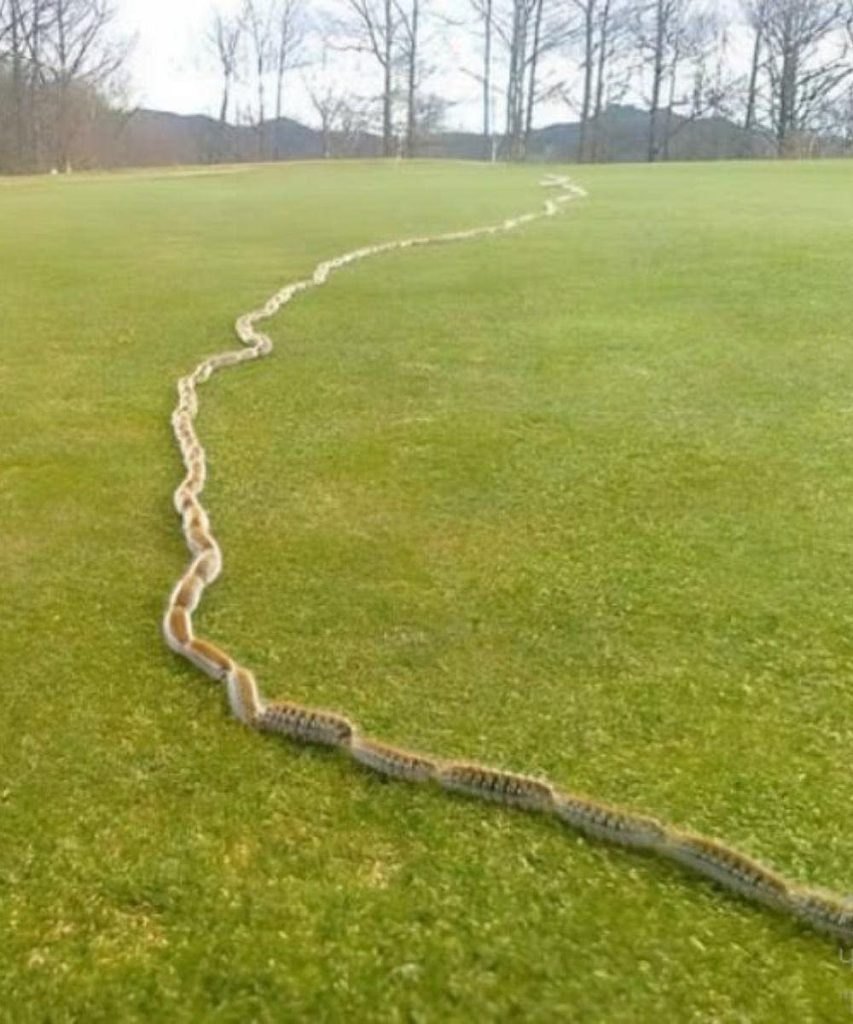
But even in the U.S., native species like tent caterpillars and fall webworms do this too—especially when leaving their nest to find a place to pupate, following pheromone trails, or moving as a group for safety in numbers.
They’re not lost. They’re on a mission.
Why do they move like this?
Pure survival instinct. The leader lays down a silk thread and releases pheromones. Each follower touches the one ahead with its antennae. They move in a tight line, reducing exposure to predators. If one breaks off, it could die. So they stay connected.
Think of it like an army marching blindfolded—trusting only the person in front. Creepy? Maybe. Brilliant? Absolutely.
Should you be worried?
In most cases, no. These caterpillars are just passing through. But caution is wise:
-
Don’t touch them. Some species have irritating hairs that cause rashes, itching, or respiratory issues.
-
Keep pets away. Dogs who sniff or eat them can get mouth ulcers or severe allergic reactions.
-
Don’t try to break the chain. It disorients them and stresses the group.
Best action? Observe from a distance. Take photos. Let them pass.
Where were they going?
That’s the mystery. Likely destinations: underground to pupate (transform into moths), to a new tree to build a nest, or away from a disturbed habitat. They’ll disappear as quietly as they came—leaving behind only silk threads and awe.
Final thought: nature is stranger than fiction
You don’t need a jungle or a rainforest to witness wonder. Sometimes all it takes is a quiet garden, a curious eye, and the courage to look closer.
Because real magic isn’t in fairy tales. It’s in the grass. In the unseen. In 150 tiny creatures walking in perfect sync—like they’ve rehearsed for centuries.
And when you see it… you won’t forget it.
Even if you scream firs
