
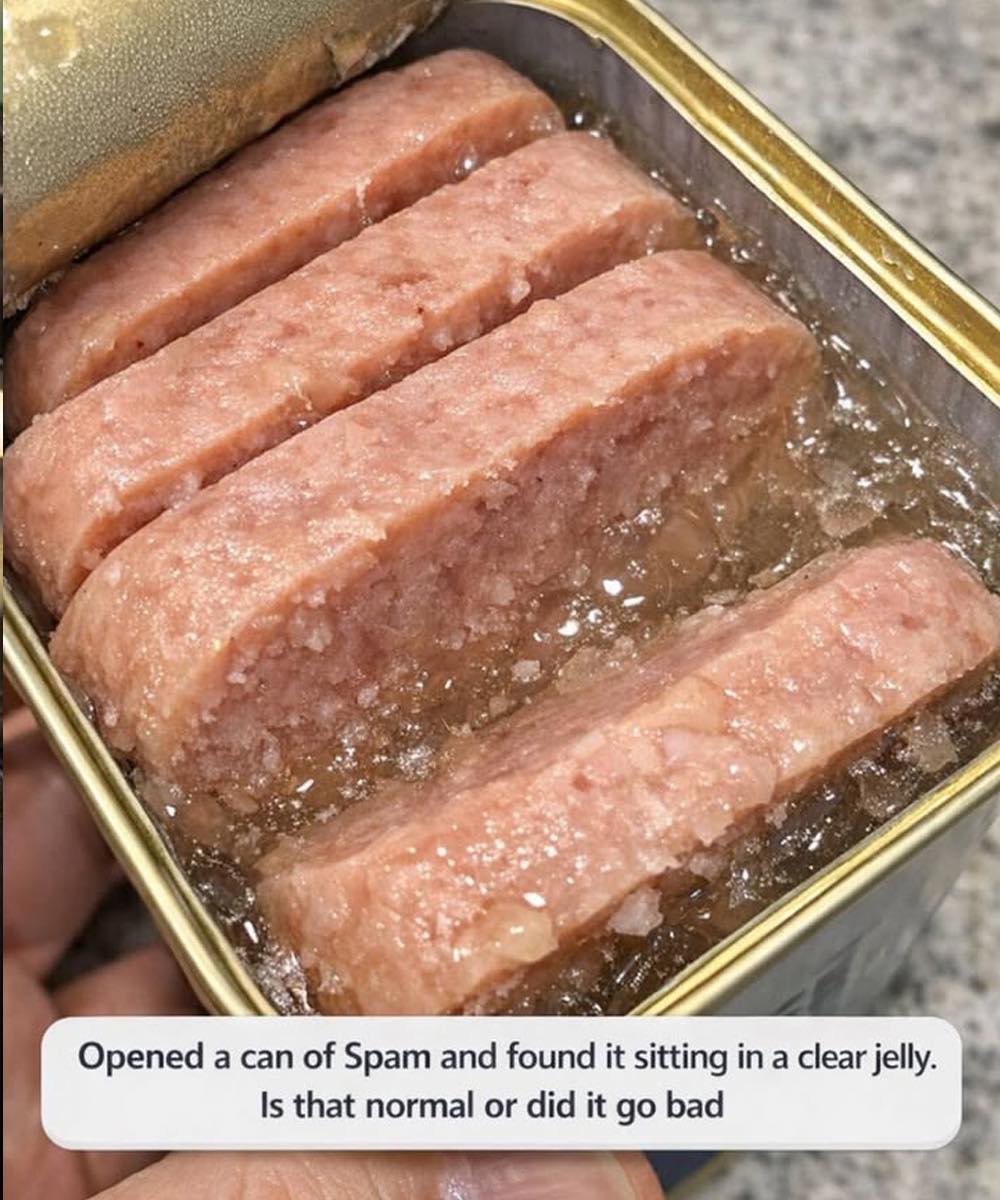
Spam is produced to be shelf-stable. During cooking, heat causes collagen proteins in the meat to convert into gelatin. Once sealed and cooled, the gelatin firms up naturally.
This process not only keeps the meat juicy but also provides an additional protective barrier against bacteria and environmental exposure, allowing Spam to remain safe for extended periods without refrigeration.
While gelatin itself is normal, certain changes can signal spoilage. If the jelly smells unpleasant, becomes unusually thick, or changes color, caution is advised. Normal jelly should appear clear or slightly amber and have little to no odor.
Cloudiness, greenish tones, or foul smells are warning signs. Bulging or leaking cans are also red flags, as they may indicate bacterial activity. In these cases, the contents should not be eaten.
When inspecting Spam, observe both the jelly and the meat. Healthy gelatin should look smooth and translucent, not slimy or discolored. Any green, black, or dark brown coloration suggests spoilage.
The meat itself should be evenly pink. Gray patches, brown spots, or uneven coloring may mean the product has gone bad and should be discarded.
Smell is one of the easiest ways to assess freshness. Fresh Spam should have a mild, slightly salty aroma typical of cooked pork. Sour, rotten, or strong unpleasant odors indicate spoilage.
Since bacterial growth often produces foul smells early on, an off odor is a clear signal to throw the product away.
