
Remove the drawer completely. Most washing machines have a small release tab near the center. Gently press it down and slide the drawer out.
Immerse it in warm water. I filled the sink with warm, soapy water and let the drawer soak for about 15 minutes. This loosened the hardened residue that had been there for years.
Scrub every corner. Using a toothbrush and mild detergent, I scrubbed the edges, compartments, and small channels where detergent and water flow. A mixture of vinegar and water worked perfectly for stubborn stains.
Clean the inside of the compartment. Before replacing the drawer, I cleaned the inside of the washing machine where it sits. This area also collects dirt and often smells musty if left unattended.
Dry completely. Once everything was clean, I let it dry completely before putting it back.
Afterwards, the drawer looked brand new, and for the first time in months, my laundry smelled fresh and clean.
Understanding the Compartments
While cleaning helped, the real revelation came when I discovered what each compartment actually does.
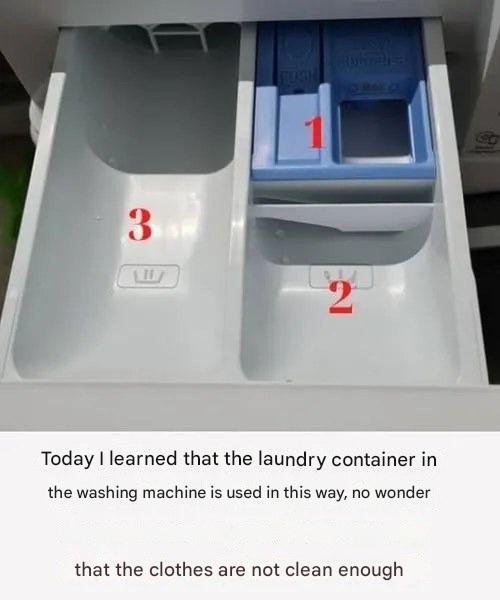
Most detergent drawers have three separate sections, each with its own symbol or label:
“I” — Prewash compartment: Used for heavily soiled clothes or long cycles that include a prewash.
“II” — Main wash compartment: This is where you put your regular liquid or powder detergent. It is released during the main wash.
The flower or star symbol: This is the compartment for fabric softener, colorants, or fragrances. These are released during the final rinse.
Like many people, I used to pour detergent directly into the drum, which meant the washing machine wasn’t distributing it properly. When you pour it into the drawer, it dissolves evenly, ensuring the soap reaches every fiber of your clothes at the right time.
Common mistake: overfilling.
It’s tempting to add a little more detergent, especially when your clothes are very dirty, but it’s one of the worst things you can do. Overfilling the compartments can cause clogs, leaks, and inadequate rinsing. It can also leave sticky residue on your laundry.
Instead, follow the maximum fill line indicated inside the drawer. A small adjustment like this can significantly improve washing results.
The results:
After following these steps, the change was undeniable. My clothes became softer, shinier, and smelled fresh. Even my towels, which had previously felt stiff, suddenly felt soft again.
It also made me realize how much my washing machine had been working hard. Without dirt blocking the flow of detergent, it ran quieter and more efficiently.
Now, I make a point of thoroughly cleaning the detergent drawer every two or three weeks. It takes less than ten minutes, but it keeps my washing machine looking like new.
A little attention can make a difference.
Read more…
