3. A Trip Back in Time: When Violet Ray Machines Were Household Gadgets
During the early 20th century, violet ray machines were popular household gadgets, touted as cure-alls for a variety of ailments. These devices used high-frequency electrical currents to produce a violet glow, believed to have therapeutic benefits. They were marketed as effective treatments for everything from arthritis to acne, making them a staple in many homes.
Violet ray machines were part of a larger movement of quack medicine, where unregulated and often dubious medical devices were sold to the public with grandiose claims. Despite their questionable efficacy, these devices were widely accepted and used, reflecting both the medical understanding and consumer culture of the time.
4. What a Violet Ray Electrode Is—and How This One Fits the Puzzle
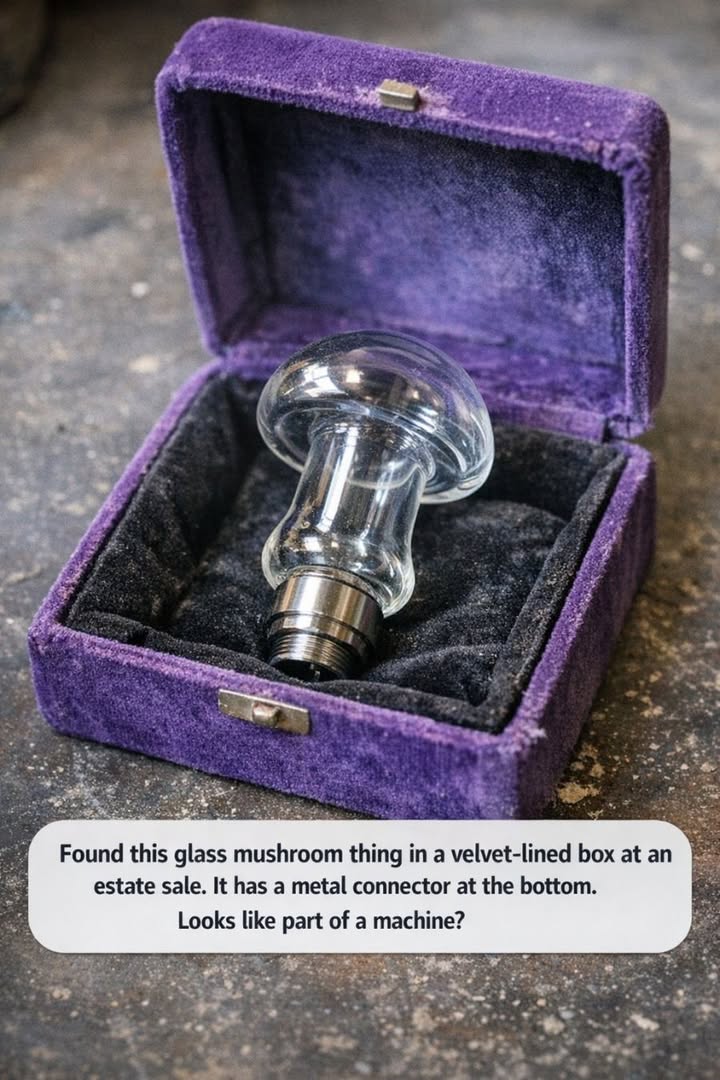
A violet ray electrode is a key component of the violet ray machine, designed to deliver the electrical current to the user’s body. The electrodes came in various shapes and sizes, each tailored for specific treatments. The mushroom-shaped electrode was particularly popular for its ability to cover larger surface areas during treatment.
The glass mushroom found at the estate sale fits the profile of a violet ray electrode. Its design and materials are consistent with those used in these devices, and the metal connector would have attached it to the machine’s wand. This connection would allow the electrical current to pass through the electrode, generating the characteristic violet glow.
5. How These Glass Electrodes Worked Inside Early Quack Medicine Devices
Violet ray machines operated by generating a high-voltage, low-amperage current, which was then transferred to the glass electrode via the metal connector. Once the electrical current entered the electrode, it would ionize the gas inside the glass, creating a violet glow and a soft buzzing sound.
The user would apply the glowing electrode to the skin, where the electrical discharge was believed to stimulate healing. Although there was little scientific evidence to support these claims, the devices gained a reputation for their supposed benefits, largely due to their novelty and the persuasive marketing of the time.
6. Common Electrode Shapes and Why the “Mushroom” Was So Popular
Violet ray electrodes came in an array of shapes, each designed for specific applications. Common shapes included combs for hair treatments, bulbs for general use, and, of course, mushrooms for larger areas. The mushroom shape was favored for its versatility, capable of covering broad sections of the body with ease.
The wide cap of the mushroom electrode allowed for a diffuse distribution of the electrical current, making it suitable for treating areas like the back or abdomen. Its ergonomic design also made it comfortable to use, which likely contributed to its popularity among violet ray enthusiasts.
7. Safety Check: Is This Old Violet Ray Electrode Dangerous to Keep?
While violet ray machines were once commonplace, modern safety standards have rendered them obsolete due to potential risks. The high-voltage currents they produce can be dangerous, particularly if the device is damaged or improperly used.
However, the glass mushroom electrode itself poses little risk when not connected to a power source. As a standalone object, it is inert and harmless. Collectors should exercise caution if attempting to use a vintage violet ray machine, ensuring it is in good condition and operated safely, or preferably, not at all.
8. Collector’s Corner: Rarity, Condition, and What Makes One Valuable
Violet ray electrodes, especially those in good condition, can be valuable to collectors of medical antiques. The rarity of the item, its condition, and the presence of original packaging, such as a velvet-lined box, all contribute to its value.
Collectors often seek electrodes with unusual designs or those from well-known manufacturers. A complete set, including the original machine and accessories, can significantly increase the item’s worth. The glass mushroom electrode’s condition, with no chips or cracks, and its original box, make it a desirable piece for enthusiasts of vintage medical devices.
9. How to Confirm Your Find: Labels, Hardware, and Online Reference Groups
Identifying a violet ray electrode can be challenging without proper labeling. Look for any manufacturer’s markings or serial numbers on the metal connector or glass surface. These can provide clues about the electrode’s origin and age.
Online reference groups and forums dedicated to antique medical devices can be invaluable resources. Engaging with a community of collectors can help verify the authenticity and history of the item. Sharing photographs and descriptions can also assist in identifying the electrode’s specific model and manufacturer.
Next Page