
Some people find sleeping in a slightly reclined position more comfortable, particularly those with back pressure or certain mobility issues.
A supportive recline can help reduce pressure on the spine and may offer relief for some individuals. Adjustable beds or wedge pillows are often used to create gentle support.
4. Maintaining a Neutral Spine
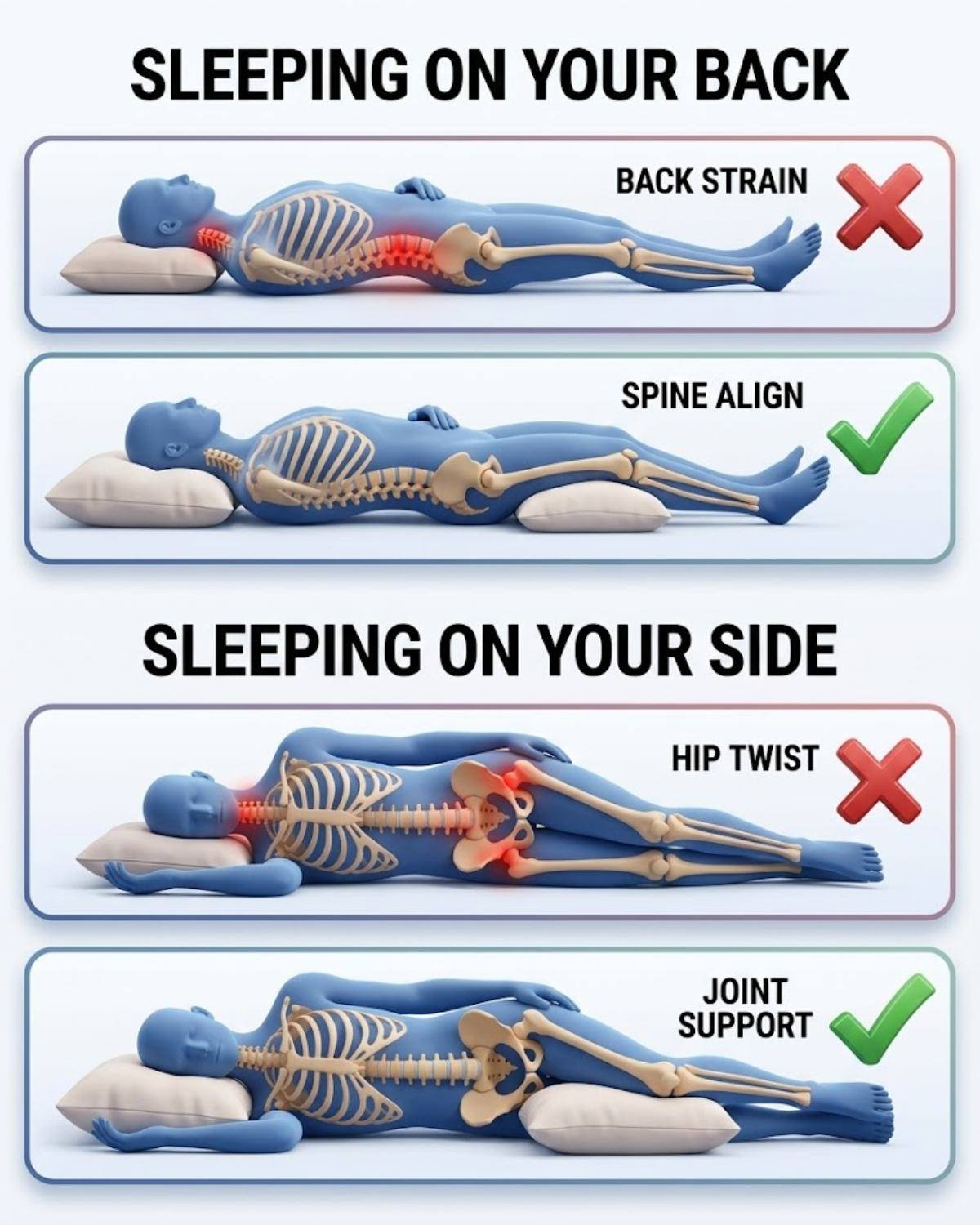
No matter which position you prefer, the main goal is keeping the spine in a neutral alignment. This means avoiding awkward twisting, extreme bending, or unsupported sleeping angles.
Think of it as keeping your head, neck, and back comfortably aligned — not forced into uncomfortable positions.
Sleeping Habits to Avoid
Certain sleep positions may place extra stress on the spine and muscles.
Sleeping flat on your stomach is often considered one of the least supportive positions because it may force the neck into an awkward angle for hours.
Using no neck support can also create strain, especially if the head tilts too far backward or forward.
Twisted sleeping positions may place uneven pressure on the back and hips.
And surprisingly, too many pillows under the head may lead to poor neck alignment and stiffness.
Better Sleep, Better Support
Improving your sleep posture may help reduce:
Neck pain
Lower back discomfort
Pressure on nerves
Sciatic irritation
Morning stiffness
Your spine continues working for you even while you sleep — and giving it proper support may make a difference in how you feel when you wake up.
Educational purposes only – not medical advice. If pain persists or becomes severe, consult a healthcare professional.
