1 unbaked 9-inch pie crust (store-bought or homemade, well-chilled)
1 1/2 cups granulated sugar
1/2 cup unsalted butter, melted and slightly cooled
3 large eggs, at room temperature
1/4 cup whole milk or heavy cream
Preheat your oven to 375°F (190°C). Place the unbaked pie crust in a 9-inch pie plate, crimp the edges as desired, and set it on a baking sheet to make it easier to transfer in and out of the oven.
In a medium mixing bowl, whisk together the granulated sugar and melted, slightly cooled butter until the mixture looks thick and glossy. You’re aiming to fully hydrate the sugar with the fat so it bakes into a smooth, custardy base.
Add the eggs one at a time, whisking well after each addition. Take a moment to whisk until the mixture is smooth and a bit lighter in color; this helps the eggs incorporate evenly and prevents streaky, overcooked bits in the finished pie.
Whisk in the milk or heavy cream just until the filling is uniform and no streaks remain. The mixture will be fairly loose—more like a thin custard than a batter.
Pour the filling into the prepared pie crust. If you see any large bubbles on the surface, you can gently tap the pie plate on the counter a few times to bring them up and pop them; this encourages a more even, glossy top.
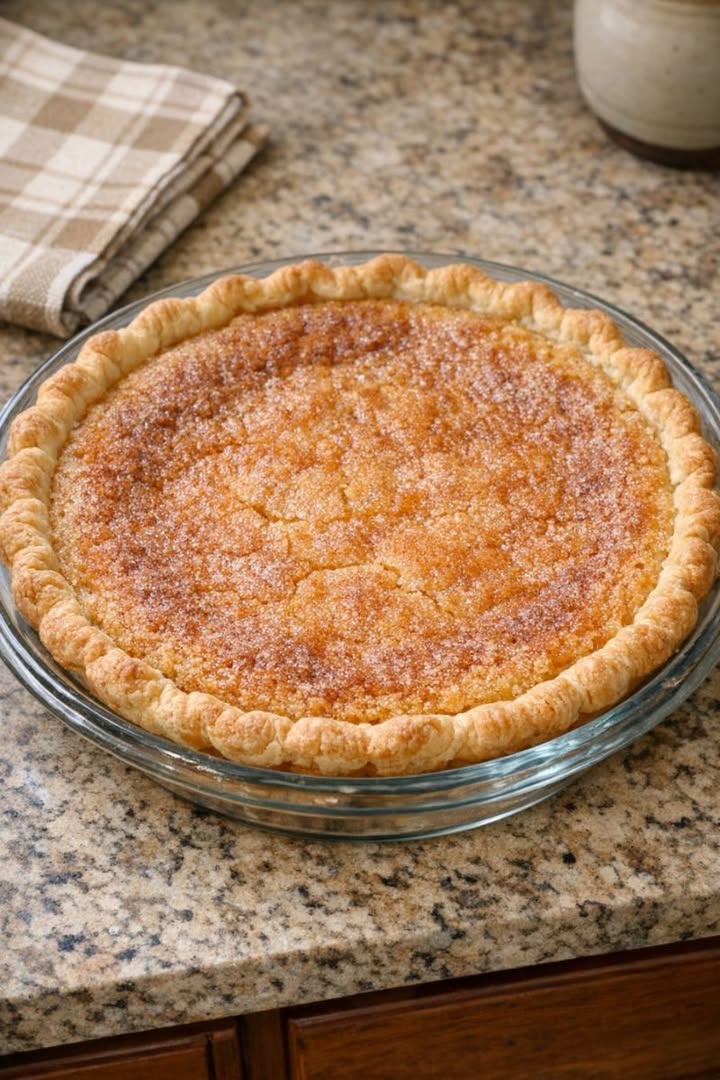
Bake at 375°F (190°C) for 10 minutes, then reduce the oven temperature to 325°F (165°C) without opening the door. Continue baking for 30–35 minutes more, or until the edges are set, the center has a slight wobble when gently jiggled, and the top is golden with a light, crackly sheen.
Remove the pie from the oven and place it on a wire rack. Let it cool completely—at least 2 hours—so the custard can finish setting. Chess pie is easiest to slice once fully cooled and is even better after a short chill in the refrigerator.
Slice into small wedges to serve. Store leftovers covered in the refrigerator for up to 4 days; the texture tends to firm up and the flavors meld nicely by the second day.
Because chess pie is built on such a simple base, it’s very forgiving and easy to adapt. For a more traditional Southern profile, add 1–2 tablespoons of fine cornmeal and 1–2 teaspoons of lemon juice or vinegar to the filling; historically, the acidic element helped balance the sweetness and slightly thicken the custard. If you enjoy a hint of warmth, whisk in 1 teaspoon of vanilla extract and a pinch of salt—both deepen the flavor and keep the sweetness from feeling one-dimensional. For a chocolate variation, replace 1/4 cup of the sugar with unsweetened cocoa powder and sift it in to avoid lumps. You can also brown the butter before melting (then cool it) for a deeper, nutty note that mimics caramel. Texturally, if you prefer a crisper crust, blind-bake the pie shell for 10–12 minutes at 375°F before adding the filling, letting it cool slightly first. Finally, keep in mind that oven temperatures vary; if the top is browning too quickly, tent the pie loosely with foil for the last 10–15 minutes of baking to protect that delicate, sugary crust while the center finishes setting.