
Your Sleeping Position Could Be Hurting Your Spine Without You Realizing It
Did you know that the way you sleep at night can either help protect your spine — or slowly contribute to pain and discomfort over time?
Most people spend around one-third of their lives sleeping, yet very few think about how their sleeping position affects their back, neck, and overall body alignment. While a good mattress matters, your posture during sleep may be just as important.
Waking up with neck stiffness, lower back pain, or numbness in your arms or legs could be your body sending warning signs that your sleep posture needs attention.
Why Your Sleeping Position Matters
Your spine plays a crucial role in supporting your body, protecting nerves, and helping you move comfortably throughout the day. During sleep, your muscles relax and your body enters recovery mode. But if your spine is twisted, unsupported, or under pressure for hours, it can lead to discomfort and strain.
Poor sleeping posture can place extra stress on muscles, joints, and nerves. Over time, this may contribute to issues such as back pain, neck tension, poor circulation, and even sciatic discomfort.
The good news? Small adjustments to your sleeping position may help reduce strain and improve comfort.
Best Sleeping Positions for Spinal Health
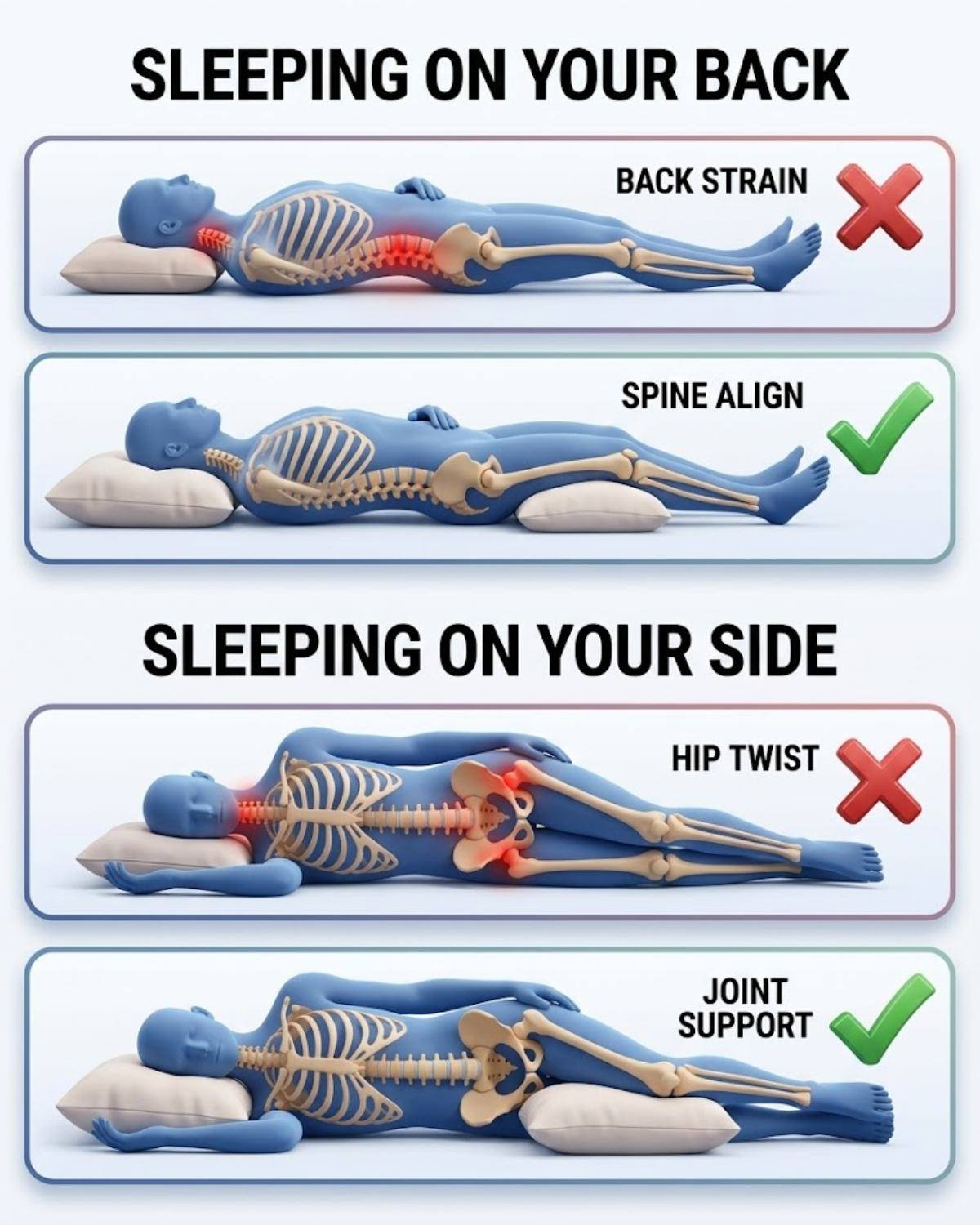
1. Sleeping on Your Back With a Pillow Under Your Knees
Many experts consider back sleeping one of the best positions for spinal support. When done correctly, it helps distribute body weight evenly and reduces pressure points.
Placing a pillow under your knees may help maintain the natural curve of your lower back and reduce tension in the spine.
This position may also help relieve neck pressure when paired with a supportive pillow that keeps the head aligned.
2. Sleeping on Your Side With a Pillow Between Your Knees
Side sleeping is another commonly recommended position, especially for people with lower back discomfort.
Adding a pillow between the knees can help keep the hips aligned and prevent the spine from twisting during the night. It may also reduce pressure on the lower back and hips.
For best results, try to keep your head aligned with your shoulders using a pillow that is not too high or too flat.
3. A Slight Recline With Support
